
The United Parcel Service cargo plane that crashed into an industrial site in Kentucky last year and left 15 people dead featured a faulty part that aerospace company Boeing had flagged 14 years earlier, new National Transportation Safety Board findings released this week show.
The part that broke in the crash, according to an updated NTSB report released Jan. 14, had failed four other times.
The Nov. 4 crash in Louisville marked the deadliest disaster in UPS Airlines’ history, USA TODAY previously reported. Nearly two dozen bystanders on the ground also suffered injuries in connection with the disaster.
Bound for Hawaii, Flight 2976 erupted into a ball of flames shortly after taking off from the Louisville Muhammad Ali International Airport at 5:15 p.m. The aircraft, a Boeing MD-11F, crashed into an industrial area, killing all three members on board and 12 others on the ground.
In an updated six-page report released Jan. 14, the NTSB wrote Boeing knew about a flagged part on the plane linked to the crash.
Greg Biffle home reportedly burglarized: Crime took place 3 weeks after fatal plane crash
Study of the airplanes with cracks
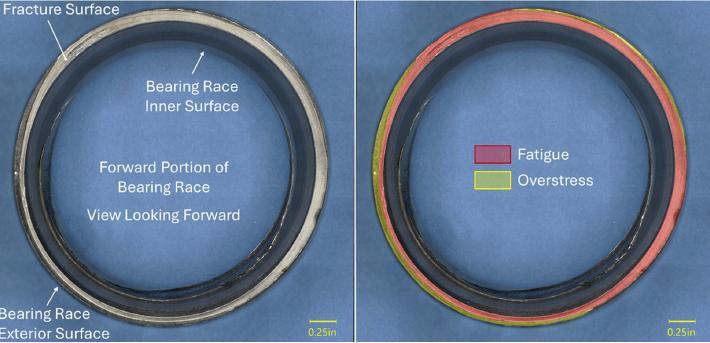
According to a February 2011 letter to airlines, Boeing noted failures with parts of the pylon, the framework that connects the engine, during four incidents on three MD-11 airplanes, the same model as UPS Flight 2976. After takeoff, the report reads, the pylon and left engine of UPS Flight 2976 detached from the wing and the plane crashed.
The MD-11 planes Boeing studied showed fatigue cracks on the pylon, similar to the cracks NTSB investigators reported in preliminary findings of the Nov. 4 crash. Following its study of the airplanes with cracks, Boeing said it would update its maintenance manual to include inspections that would ensure the spherical bearing race, the part showing cracks, would remain functional.
‘Dangerous and unsafe’: Plane crash families file suit against UPS, GE
NTSB officials said they are still reviewing the inspection techniques used by Boeing for its MD-11 planes, how UPS incorporated the information of the Boeing letter into its own practices and the