
Nestled in the flat farmlands of southern Acadia Parish is a company that is responsible for most of the nutrients you’ll find in breakfast cereal, sports drinks and supplements.
The Wright Group has grown to become a global leader in nutritional blends and enriched products 135 years after it was founded in Crowley by an Indiana rice farmer.
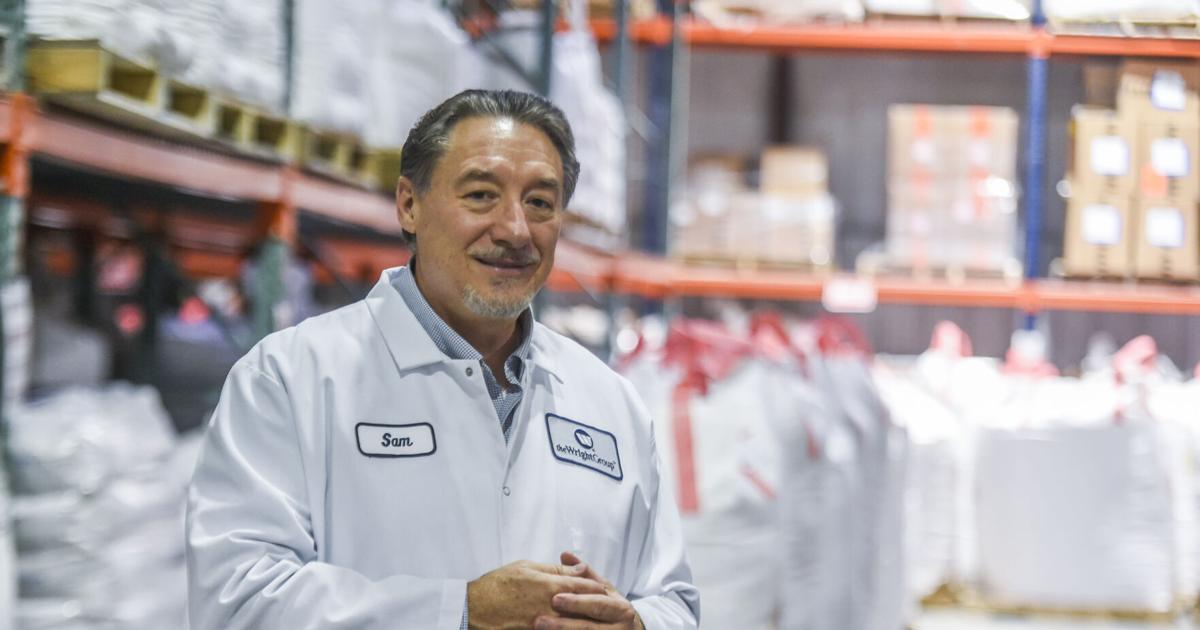
Ask current president and CEO Salmon L. “Sam” Wright IV about the company’s history, and he’ll show you a museum-type display inside. Wright, the great-grandson of founder Salmon L. “Sol” Wright, bought the company 21 years ago.
“We’re very unique,” Wright said. “We’re actually the last original family with a business like this. All the other families we competed against over the years have sold out to foreign corporations. We’re the last homegrown American company like this.”
The Wright Group has offices in California and Ohio and recently bought the former Wholesale Electric headquarters in Lafayette for $5.5 million. It also has a presence in China, Mexico, Australia, Brazil and across Europe.
The Wright Group is growing and has challenges along with that growth, which is one reason why Wright wants to raise more awareness of what the company does. He recently hosted area mayors, state legislators and other public officials to take a tour of the company
Among the products on the way: A rice flour that is high in protein and low in sugar and a high protein sports drink in conjunction with LSU that “could be their next Gatorade,” he said.
In this week’s edition of Talking Business, Wright talks about how finding employees has become a significant hurdle, the protein phenomenon in the U.S. and how he initially did not get involved with the family business after he graduated from college.
This interview has been edited for clarity.
The company expanded in the 1950s to provide custom vitamin and mineral premixes. Tell me a bit about the nutritional side of the business.
In 1994, we were awarded all of the Kellogg (cereals) fortification. We make custom nutrient premixes that these companies add to their product in the process. So all of those nutrients in (them) come from one of our facilities. Our bandwidth is anything that has nutrients or protein or anything that’s added to food or dietary supplements — anything from pet food to pharmaceutical application.
What’s been the challenge for you in finding employees?
The mayor of Crowley pointed out that 46% of the population here lives in poverty. Most of the housing in Crowley doesn’t (make) code, but the city can’t enforce that because they would have to demolish half the town. Before they can provide good labor to us, they’ve got to fix that problem but also educate. A lot of these kids can’t make it to school. There’s a big problem in these rural areas where businesses want to provide jobs, but the labor is not meeting the standard.
What can you do as an employer to mitigate the issue?
When you get an employee over here, you have to start over and raise them all over again. Or you have migrants that can’t speak English and don’t understand what you’re trying to get them to do. That’s a common complaint from all the industries in town. The solution that the Legislature came up with was prison labor, where they bus Angola prisoners to work for a day and bus them back. The FDA will not let us do that.
Protein is a big buzzword in prepared foods nowadays. What’s the deal with protein? Why is there such a surge in customer demand?
Ozempic and Wegovy — the weight loss drugs. What happens is your body loses 60% water and 40% muscle. So you need to hydrate, and you need to consume more protein and fiber. If you just consume protein, you have constipation. You need a fiber element. With our new Wright Pro custom protein blends, we’re mixing protein, fiber and hydration nutrients so that you can take that and add it to any food.
Tell me about your background. How did you take over the business from your dad and mold it to what it is today?
I have a degree in industrial engineering, and I was hired on with UPS in 1984. After about six years, they threw me into operations, and I got a call from my dad. He said,